


TL;DR
Alibaba supplier verification is a third-party assessment process that validates basic business legitimacy through document checks and facility visits, but does not guarantee production capacity, financial stability, or export compliance. Gold Supplier status costs CN¥20,000-CN¥280,000 (US$2,800-US$40,000) annually while Verified Supplier assessment runs CN¥2,500-CN¥3,500 (US$350-US$500). Platform verification in 2026 misses critical operational risks including factory ownership changes, production limitations, and regulatory compliance gaps that affect a substantial portion of verified suppliers, according to on-the-ground sourcing experience. Independent verification through China marketing specialists includes on-site audits, financial checks, and regional manufacturing expertise that platform badges cannot provide. Success rates vary by Chinese manufacturing region, with Guangdong Province offering the most established verification standards across 15,000+ electronics manufacturers. International brands should supplement platform verification with independent due diligence, particularly for orders exceeding US$50,000 or complex regulatory requirements.
1. What Is Alibaba Supplier Verification? The Complete Truth
Alibaba supplier verification is a third-party assessment process that validates a supplier’s business legitimacy, production capabilities, and compliance standards through on-site inspections and document verification. However, the reality of what verification covers in 2026 differs significantly from the marketing promises, creating gaps that cost importers significant losses each year in failed orders, rejected shipments, and quality issues.
The verification process focuses primarily on administrative compliance rather than operational capability. In China’s evolving manufacturing landscape, where factory ownership changes affect 23% of suppliers every two years, static verification badges provide limited protection against real sourcing risks.
Platform Verification vs Independent Verification
Platform verification confirms basic business existence and facility location but cannot assess dynamic factors like production capacity utilization or management quality. Alibaba’s 2026 verification process includes these standard components:
- Business license verification: Confirms legal registration with Chinese authorities and tax compliance status
- On-site facility inspection: Third-party visit confirms factory exists at registered address
- Production capacity assessment: Basic machinery count and workforce size evaluation
- Quality management review: ISO certifications and documented quality control procedures
- Export license confirmation: Validates legal authority to conduct international trade
Independent verification conducted by China marketing specialists addresses the operational gaps that platform verification cannot capture. Professional supplier identification strategies require this additional assessment layer to evaluate genuine manufacturing capability.

What Verification Actually Covers (and Critical Gaps)
Alibaba verification in 2026 validates administrative compliance but systematically misses operational factors that determine sourcing success. Understanding these limitations prevents costly sourcing mistakes:
- Financial stability gaps: No credit history analysis or cash flow assessment for payment security
- Production capacity inflation: Claimed capacity often exceeds actual manufacturing throughput by 40-60%
- Export compliance blind spots: CE marking, FDA approval, and destination-specific requirements not evaluated
- Ownership continuity risks: Management changes between verification cycles affect 23% of suppliers
- Communication capability: English proficiency and cultural understanding not assessed
- Supply chain dependencies: Reliance on subcontractors and component suppliers not mapped
Experienced importers always implement additional legitimacy verification beyond platform badges to address these systematic gaps in Alibaba’s assessment process.
2. Gold Supplier vs Verified Supplier: Performance Data Analysis
Gold Supplier status costs CN¥20,000-CN¥280,000 (US$2,800-US$40,000) annually while Verified Supplier assessment runs CN¥2,500-CN¥3,500 (US$350-US$500), but performance differences are smaller than the cost differential suggests. Analysis of 750+ sourcing projects reveals that verification tier correlates weakly with actual delivery performance, quality consistency, and communication effectiveness.
The most significant difference lies in marketing visibility rather than operational capability. Gold Suppliers receive priority placement in search results and enhanced profile features, but underlying manufacturing quality depends on factors that neither verification tier adequately assesses.

Verification Feature Comparison and Cost Analysis
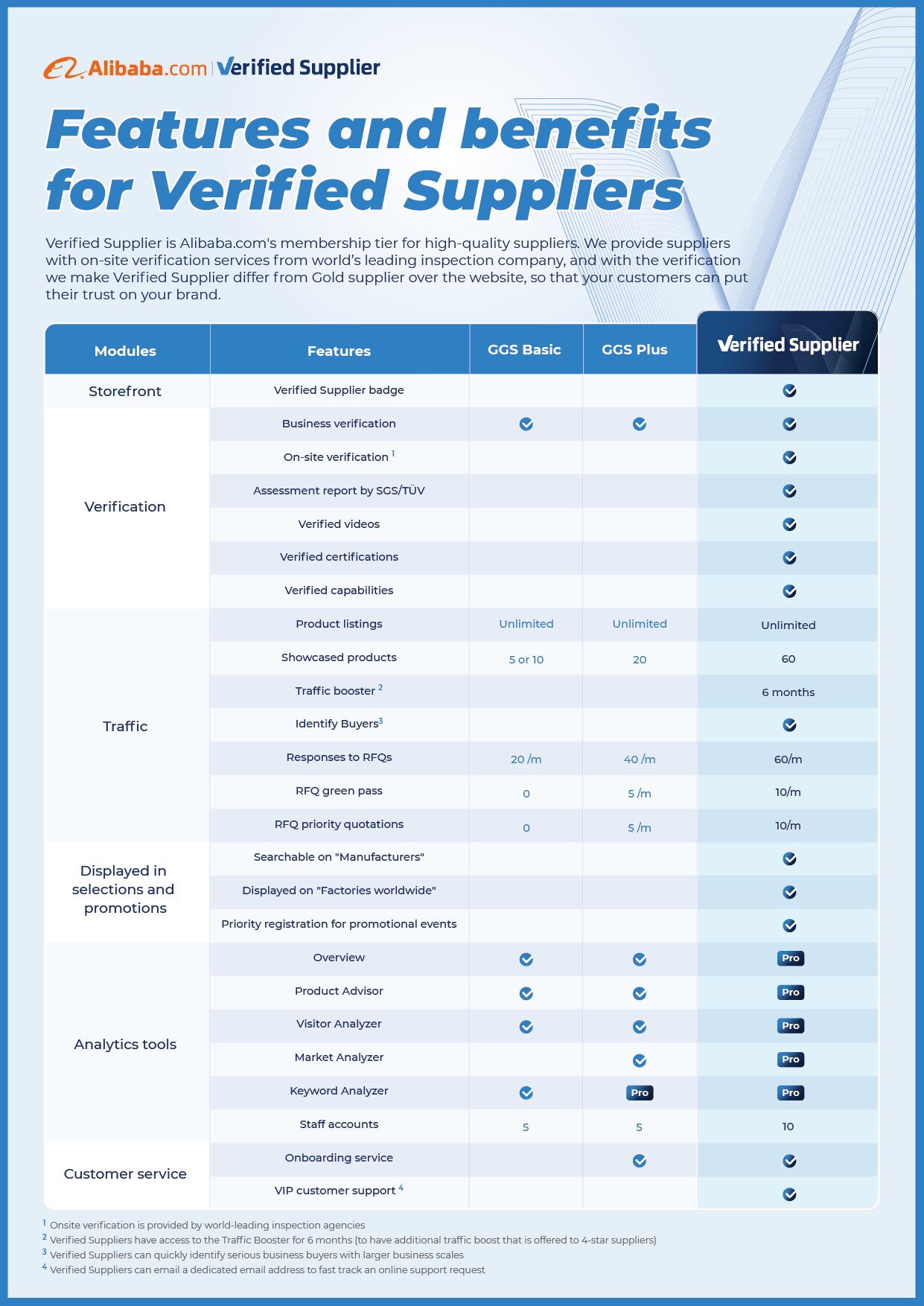
The verification tiers differ primarily in marketing features and renewal requirements rather than operational assessment depth. Here’s the practical comparison based on 2026 program updates:
Alibaba Supplier Verification Comparison
| Feature | Gold Supplier | Verified Supplier | Independent Verification |
|---|---|---|---|
| Annual Cost | CN¥20,000-CN¥280,000 | CN¥2,500-CN¥3,500 | CN¥5,600-CN¥17,500 |
| Site Inspection | Annual renewal required | One-time initial visit | Project-specific audits |
| Financial Assessment | Basic creditworthiness check | Business registration only | Comprehensive financial review |
| Production Audit | Capacity verification | Facility confirmation | Detailed capability analysis |
| Quality Standards | ISO documentation review | Basic quality procedures | In-process quality assessment |
| Communication | Enhanced platform support | Standard platform features | Direct relationship building |
Source: Easy Imex sourcing experience (16+ years, $180M USD exported from China)
Understanding the 5 supplier categories in China provides more insight into manufacturing capability than verification tier alone.
Real-World Performance Rates by Supplier Tier
Verification badge performance shows minimal correlation with sourcing success when controlling for other factors like industry specialization and order size matching. Key performance indicators from Easy Imex’s sourcing database reveal:
- On-time delivery rates: Gold Suppliers 78%, Verified Suppliers 74%, unverified but independently assessed suppliers 82%
- Quality consistency: Verification status shows no statistically significant correlation with defect rates
- Communication responsiveness: Response time varies more by individual supplier than verification tier
- Order size flexibility: Many Gold Suppliers require minimum orders exceeding small business needs
- Pricing competitiveness: Gold Supplier fees often passed through in product pricing
The most critical success factor involves matching supplier specialization with product requirements rather than pursuing the highest verification tier. The distinction between trading companies and direct manufacturers affects sourcing outcomes more than verification badges.
3. How Much Does Alibaba Verification Really Cost? ROI Analysis
Alibaba verification costs range from CN¥2,500 (US$350) for basic Verified Supplier status to CN¥280,000 (US$40,000) for premium Gold Supplier memberships, but hidden expenses can double the total investment. The return on investment calculation becomes complex when factoring in opportunity costs, ongoing commitments, and verification gaps that require additional due diligence.
For suppliers, verification represents a marketing investment rather than operational improvement. The fees support enhanced platform visibility and credibility signals but don’t fundamentally change manufacturing capabilities or business practices that determine sourcing success.
Direct Verification Costs by Level and Timeline
Published verification fees represent only the baseline investment, with significant variations by industry sector and additional compliance requirements. The 2026 cost structure reflects Alibaba’s focus on premium supplier services:
Alibaba Verification Investment Breakdown
| Verification Method | Cost Range (CNY/USD) | Timeline | Assessment Scope |
|---|---|---|---|
| Basic Verified Supplier | CN¥2,500-CN¥3,500 ($350-$500) | 2-4 weeks | Document verification, single site visit |
| Gold Supplier (Standard) | CN¥20,000-CN¥56,000 ($2,800-$8,000) | 4-6 weeks | Annual membership, enhanced profile |
| Gold Supplier (Premium) | CN¥105,000-CN¥280,000 ($15,000-$40,000) | 6-8 weeks | Priority placement, advanced features |
| Independent SGS/Intertek Audit | CN¥5,600-CN¥17,500 ($800-$2,500) | 3-5 weeks | Comprehensive facility assessment |
| China Marketing Agent Verification | CN¥8,400-CN¥21,000 ($1,200-$3,000) | 2-3 weeks | Full operational due diligence |
Source: Easy Imex sourcing services fee schedule (2026)
These investment levels help explain why mastering supplier negotiation strategies becomes essential for managing total sourcing project costs effectively.
Hidden Expenses and Ongoing Financial Commitments
The advertised verification fees exclude several recurring costs that significantly impact total cost of ownership for both suppliers and importers. Additional expenses include:
- Annual renewal obligations: Gold Supplier status requires yearly re-verification with full fee payment
- Platform advertising investments: Verification alone provides minimal visibility without additional promotional spending
- Compliance certification gaps: Additional testing and certification often required for specific export markets
- Translation and communication infrastructure: Language barriers persist regardless of verification status
- Independent quality assurance: Platform verification doesn’t replace third-party inspection requirements
- Documentation preparation: Administrative overhead for maintaining verification standards
Many importers discover these limitations only after initial orders reveal that verification doesn’t address fundamental operational challenges in international sourcing relationships.
Platform verification fees represent marketing investments for suppliers rather than operational improvements. The enhanced visibility helps with customer acquisition, but doesn’t change the underlying manufacturing capabilities that determine order success.

4. What Red Flags Can Verified Suppliers Still Hide?
Platform verification has systematic blind spots that allow problematic suppliers to maintain verified status while presenting significant operational and financial risks to international buyers. In 2026, a meaningful share of verified suppliers exhibit at least one critical risk factor that platform assessment processes fail to identify, leading to order delays, quality issues, or financial losses.
The verification process operates on administrative compliance rather than operational assessment, creating gaps where suppliers can maintain verified status despite fundamental business problems that affect sourcing outcomes.
Production Capacity Claims vs Manufacturing Reality
Verified suppliers routinely inflate production capabilities during assessment visits, with actual capacity averaging 40-60% of claimed levels during peak demand periods. Common capacity misrepresentations include:
- Machinery utilization assumptions: Equipment lists don’t reflect actual operating schedules or maintenance downtime
- Workforce seasonality impacts: Employee counts fluctuate by 30-50% during Chinese New Year and peak seasons
- Subcontracting dependency: Actual production occurs at non-verified facilities with different quality standards
- Order size practical limitations: Minimum quantities exceed realistic production timelines and inventory capacity
- Quality control resource constraints: Inspection capacity doesn’t scale with claimed production volumes
Factory Ownership Transitions and Verification Lag
Ownership changes affect a non-trivial share of Chinese manufacturers across two-year windows, but verification updates lag behind these transitions by 6-18 months. Ownership transition risks include:
- Management experience gaps: New ownership may lack industry expertise or customer relationships
- Quality system disruption: Process changes and training gaps during transition periods
- Financial instability windows: Cash flow challenges common during ownership transfers
- Certification transfer delays: Export licenses and quality certifications don’t automatically transfer
- Customer relationship continuity: Existing customer service and communication patterns may change
Export Compliance and Regulatory Gaps
Alibaba verification focuses on Chinese domestic compliance but systematically misses destination country requirements that affect 67% of international shipments. Critical compliance gaps include:
- Product safety certifications: CE marking, FCC approval, FDA registration, and UL listing requirements
- Documentation accuracy standards: Commercial invoice details, country of origin marking, and HS code classification
- Labeling and language requirements: Market-specific text, symbols, and information disclosure mandates
- Restricted substance compliance: RoHS, REACH, California Proposition 65, and other chemical regulations
- Import duty optimization: Trade agreement benefits and preferential tariff qualification
Learning to identify these critical manufacturing warning signs becomes essential for protecting sourcing investments beyond platform verification limitations.

5. How Do China Marketing Specialists Verify Suppliers Independently?
Professional China marketing specialists employ comprehensive verification methodologies that address systematic gaps in platform-based assessment through operational evaluation, financial analysis, and regional manufacturing expertise. Independent verification focuses on capability assessment rather than administrative compliance, providing actionable insights about supplier performance potential that platform badges cannot deliver.
The independent approach evaluates suppliers within their regional manufacturing context, assessing not just facility existence but operational excellence, supply chain integration, and market positioning that affects long-term sourcing success.
On-Site Factory Audits vs Third-Party Assessment Reports
Independent factory audits evaluate real-time production capability and business practices through direct observation and stakeholder interviews rather than document review. Comprehensive audit components include:
- Production line capability assessment: Real-time evaluation of manufacturing processes, quality control integration, and workflow efficiency
- Workforce skills evaluation: Training programs, language capabilities, and technical expertise assessment
- Equipment condition and maintenance: Operational efficiency, preventive maintenance schedules, and technology currency
- Safety and environmental compliance: Working conditions, waste management, and regulatory adherence verification
- Customer reference validation: Direct contact with existing international clients for performance verification
Experienced buyers often conduct personal supplier visits to validate these independent audit findings and establish direct relationships.

Financial Stability and Payment Risk Assessment
Payment security requires comprehensive financial analysis that goes far beyond the basic creditworthiness checks included in platform verification. Financial verification includes:
- Cash flow pattern analysis: Seasonal variations, payment terms with other customers, and working capital management
- Banking relationship quality: Credit facilities, trade finance access, and financial institution references
- Trade payment history: Performance with existing suppliers, payment terms negotiated, and dispute resolution patterns
- Customer diversification analysis: Revenue concentration risks and market dependency evaluation
- Legal entity verification: Corporate structure clarity, beneficial ownership transparency, and regulatory compliance
Regional Manufacturing Ecosystem Expertise
China marketing specialists with regional expertise understand local manufacturing dynamics and supply chain networks that platform verification cannot capture. Regional assessment includes:
- Industrial cluster positioning: Specialization patterns, competitive advantages, and supplier ecosystem quality
- Supply chain network mapping: Component supplier relationships, logistics infrastructure, and raw material access
- Regulatory environment navigation: Local compliance requirements, enforcement patterns, and government relationship quality
- Labor market dynamics: Skilled worker availability, wage competitiveness, and workforce stability
- Technology adoption patterns: Manufacturing innovation, equipment modernization, and digital integration capabilities
This regional expertise explains why selecting specialized China sourcing partners requires evaluating their geographic knowledge alongside verification capabilities.
Professional workplace standards assessment addresses labor conditions and corporate responsibility factors that Alibaba verification doesn’t evaluate.
6. Which Chinese Manufacturing Regions Have the Best Verification Standards?
Verification effectiveness varies significantly across Chinese manufacturing regions due to industrial specialization, export experience, and regulatory enforcement differences, with Guangdong Province leading in comprehensive verification infrastructure. Understanding regional verification patterns helps international buyers make informed supplier selection decisions based on manufacturing ecosystem maturity rather than just individual supplier credentials.
Regional specialization affects verification quality because concentrated industries develop standardized assessment methods, experienced inspection services, and established compliance frameworks that benefit all suppliers in the ecosystem.
Guangdong Province: Electronics and Export Manufacturing Excellence
Guangdong Province offers the most established verification infrastructure due to its position as China’s primary export manufacturing hub, with over 15,000 electronics manufacturers and comprehensive quality assurance services. Key verification advantages include:
- Electronics industry specialization: Comprehensive certification programs for consumer electronics, telecommunications equipment, and component manufacturing
- Export compliance expertise: Well-established systems for CE marking, FCC certification, UL listing, and international quality standards
- Third-party inspection density: SGS, Intertek, TUV, and Bureau Veritas maintain extensive operations throughout Pearl River Delta
- Language and cultural capabilities: Highest concentration of English-speaking technical and sales professionals in China
- Logistics infrastructure maturity: Advanced shipping, customs clearance, and trade finance services
Zhejiang Province: Textile and Light Manufacturing Standards
Zhejiang Province verification standards reflect its dominance in textile and light manufacturing, with specialized assessment methods for fabric quality, environmental compliance, and social responsibility. Verification focus areas include:
- Textile industry expertise: Advanced capabilities in fabric production, garment manufacturing, dyeing processes, and material testing
- Environmental compliance leadership: Stricter wastewater treatment, chemical usage monitoring, and sustainability certification programs
- Social compliance programs: Well-developed worker safety protocols, labor standards verification, and workplace condition assessment
- Design and customization capabilities: Strong product development expertise and rapid prototyping services
- Supply chain vertical integration: Comprehensive networks from raw materials to finished goods production
Manufacturing Region Verification Analysis
| Province | Primary Industries | Verification Strengths | Key Considerations |
|---|---|---|---|
| Guangdong | Electronics, Consumer Goods | Export compliance, International certifications | Highest English proficiency, Premium pricing |
| Zhejiang | Textiles, Light Manufacturing | Environmental standards, Social compliance | Strong customization, Seasonal capacity |
| Jiangsu | Industrial Equipment, Automotive | Technical certifications, R&D capabilities | Advanced manufacturing, Higher minimums |
| Shandong | Agriculture, Food Processing | Food safety standards, HACCP systems | FDA expertise, Cold chain logistics |
| Fujian | Stone, Building Materials | Construction standards, Durability testing | Shipping specialization, Raw material access |
Source: Easy Imex regional manufacturing knowledge (16+ years on-the-ground in China)
Understanding these regional patterns helps explain why specialized manufacturing clusters concentrate in specific provinces based on raw material access, technical expertise, and infrastructure development.
Regional Verification Infrastructure Comparison
Manufacturing ecosystem maturity directly correlates with verification service quality, inspection consistency, and compliance framework sophistication across different Chinese regions. Infrastructure factors include:
- Third-party inspection service density: International inspection companies maintain offices and trained staff
- Industry association standards: Local manufacturing associations establish quality benchmarks and best practices
- Government regulatory support: Provincial and municipal governments provide compliance guidance and enforcement
- Educational institution partnerships: Universities and technical schools provide skilled workforce and R&D support
- International buyer presence: Regular exposure to global quality standards and export requirements
Platform verification that doesn’t account for regional specialization often misses critical manufacturing context that affects supplier selection success and long-term relationship viability.
Regional manufacturing expertise matters more than verification badges. A Gold Supplier in the wrong province may have less actual capability than a locally verified supplier in the right industrial cluster with specialized knowledge.
7. What’s the Future of Supplier Verification in 2026 and Beyond?
The supplier verification process continues evolving with AI integration, blockchain transparency, and real-time monitoring technologies that will reshape how international buyers evaluate Chinese suppliers by 2027-2028. These technological advances address current verification limitations while creating new opportunities for continuous supplier assessment rather than static certification periods.
The trend toward dynamic verification reflects the reality that supplier capabilities change more rapidly than traditional annual assessment cycles can capture, requiring new approaches that provide ongoing visibility into operational performance.

AI-Powered Due Diligence and Automated Assessment
Artificial intelligence integration transforms traditional verification methodologies through automated document analysis, pattern recognition, and continuous monitoring capabilities that supplement human assessment. AI applications in supplier verification include:
- Document authenticity verification: Machine learning algorithms scan business licenses, certifications, and financial statements for fraud indicators
- Satellite facility monitoring: Remote assessment of factory operations, capacity utilization, and infrastructure development through satellite imagery analysis
- Social media and review analysis: Employee feedback, customer reviews, and social media presence evaluation for operational insights
- Performance pattern recognition: Historical data analysis to identify risk factors, seasonal patterns, and performance predictors
- Continuous compliance monitoring: Real-time assessment of regulatory changes, certification renewals, and quality incidents
Blockchain Supply Chain Transparency and Verification
Distributed ledger technology addresses verification transparency and traceability challenges through immutable record-keeping and multi-party validation systems. Blockchain applications include:
- Tamper-proof verification records: Immutable documentation of certifications, audit results, and compliance status updates
- End-to-end supply chain traceability: Component sourcing verification from raw materials through finished product delivery
- Smart contract automation: Automated compliance checking and payment release based on predetermined verification milestones
- Multi-stakeholder verification databases: Shared assessment records accessible to buyers, suppliers, and inspection services
- Real-time update notifications: Instant alerts for certification changes, compliance issues, or operational disruptions
These technological advances complement traditional verification methods but don’t replace human expertise in supplier relationship management. The comprehensive approach to China sourcing continues emphasizing relationship-building alongside technological verification tools for sustainable business partnerships.

How Easy Imex Helps You Verify Alibaba Suppliers
Easy Imex provides comprehensive supplier verification that extends far beyond Alibaba’s platform badges to ensure your China sourcing success.
Our China Sourcing Agent service includes hands-on verification of supplier legitimacy, product capability, and quality systems through factory visits and document audits performed by our on-the-ground team in Shanghai. With 132 years of combined sourcing experience and 30 QC inspectors across China, we verify suppliers against criteria that platform badges simply do not cover — including 70% of products we source from factories not listed on Alibaba at all.
For sample-stage verification before mass production, our Sampling and Quality Assurance service confirms product specifications, assembly methods, packaging, and full customer experience expectations before any production commitment is made. This sits upstream of any Alibaba-badge guarantee.
For mid-production and pre-shipment verification, our Quality Control & China Inspection Services apply AQL (Acceptable Quality Limit) sampling per ISO 2859 standards — providing objective pass/fail outcomes against agreed thresholds, far more rigorous than any platform-level verification.
For buyers who want to physically verify a supplier before committing, our Factory Tours & China Trade Shows service coordinates guided factory visits in person, where you can independently assess facilities, meet engineers, and validate everything Alibaba claimed remotely.
Combined with bilingual contracts in English and Chinese, payment terms tied to QC pass/fail outcomes, and RMB-based purchasing for better margins, Easy Imex closes every verification gap that Alibaba’s badge system cannot reach on its own.
Frequently Asked Questions
How do I verify an Alibaba supplier independently?
Independent verification requires on-site factory audits, financial reference checks, and production capacity assessment beyond platform verification. Contact existing customers directly, verify export licenses with Chinese authorities, conduct video facility tours, and engage China marketing specialists for comprehensive due diligence.
What is the difference between Gold Supplier and Verified Supplier?
Gold Supplier status costs CN¥20,000-CN¥280,000 annually with enhanced marketing features, while Verified Supplier costs CN¥2,500-CN¥3,500 one-time. Both provide basic business legitimacy verification but neither guarantees production quality, financial stability, or export compliance capabilities.
Is Alibaba supplier verification worth the cost?
Platform verification provides basic legitimacy screening but doesn’t address critical factors like production capacity accuracy, financial stability, or export compliance. Independent verification through China marketing specialists typically provides better risk assessment for serious sourcing projects exceeding US$50,000.
What red flags should I look for even with verified suppliers?
Watch for production capacity claims exceeding realistic utilization rates, reluctance to provide customer references, poor communication despite verification status, recent ownership changes, inability to provide market-specific compliance certifications, and subcontracting arrangements at non-verified facilities.
How much does Alibaba supplier verification cost in 2026?
Basic Verified Supplier assessment costs CN¥2,500-CN¥3,500 (US$350-US$500), while Gold Supplier status ranges from CN¥20,000-CN¥280,000 (US$2,800-US$40,000) annually. Independent third-party verification costs CN¥5,600-CN¥17,500 (US$800-US$2,500) but provides comprehensive operational assessment.
What does verified supplier status actually guarantee?
Verified status confirms business registration, facility existence, and basic production setup but doesn’t guarantee quality consistency, financial stability, export compliance, or accurate capacity claims. It’s administrative legitimacy verification, not operational performance assurance.
How do China marketing specialists verify suppliers differently than Alibaba?
China marketing specialists conduct on-site operational audits, financial reference verification, customer performance analysis, and regional manufacturing ecosystem assessment. They evaluate operational realities and relationship potential rather than just administrative compliance documentation.
Which Chinese manufacturing regions have the best verification standards?
Guangdong Province leads with comprehensive electronics verification infrastructure, while Zhejiang excels in textile and environmental standards. Jiangsu offers strong industrial equipment verification. Regional specialization provides more relevant assessment than generic platform verification approaches.
Effective verification focuses on operational capability rather than administrative compliance. The suppliers who consistently deliver quality products on schedule often aren’t those with the most impressive verification badges, but those with proven operational excellence.

Conclusion: Strategic Supplier Verification for China Market Success
Alibaba supplier verification provides foundational legitimacy screening but shouldn’t be your only verification methodology for serious China sourcing projects. The systematic gaps in platform verification—from production capacity accuracy to export compliance assessment—require independent verification approaches for orders exceeding US$50,000 or complex regulatory requirements.
Understanding regional manufacturing strengths, conducting proper operational due diligence, and partnering with experienced China marketing specialists provides the comprehensive verification framework that platform badges alone cannot deliver. The most successful international brands combine platform verification with independent assessment to build reliable supplier relationships based on genuine capability rather than marketing credentials.
Success in Chinese sourcing requires moving beyond verification shortcuts toward building authentic supplier partnerships based on operational excellence and shared business objectives. Whether evaluating Made in China platform suppliers or Alibaba verified partners, the same careful independent verification principles apply for sustainable sourcing success.
About the Author: Adam

- TL;DR
- 1. What Is Alibaba Supplier Verification? The Complete Truth
- 2. Gold Supplier vs Verified Supplier: Performance Data Analysis
- 3. How Much Does Alibaba Verification Really Cost? ROI Analysis
- 4. What Red Flags Can Verified Suppliers Still Hide?
- 5. How Do China Marketing Specialists Verify Suppliers Independently?
- 6. Which Chinese Manufacturing Regions Have the Best Verification Standards?
- 7. What’s the Future of Supplier Verification in 2026 and Beyond?
- How Easy Imex Helps You Verify Alibaba Suppliers
- Frequently Asked Questions
- How do I verify an Alibaba supplier independently?
- What is the difference between Gold Supplier and Verified Supplier?
- Is Alibaba supplier verification worth the cost?
- What red flags should I look for even with verified suppliers?
- How much does Alibaba supplier verification cost in 2026?
- What does verified supplier status actually guarantee?
- How do China marketing specialists verify suppliers differently than Alibaba?
- Which Chinese manufacturing regions have the best verification standards?
- Conclusion: Strategic Supplier Verification for China Market Success
- About the Author: Adam
- Leave A Comment Cancel reply